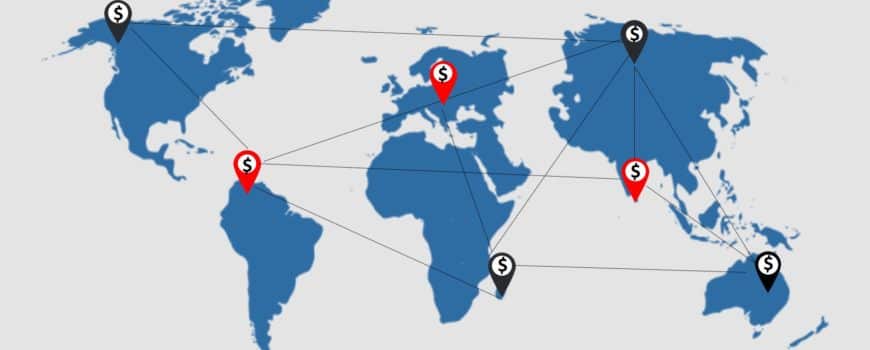
 AUS
AUS UAE
UAE SG
SG USA
USA
Transfer Pricing Advisory Services in India
Strategic Transfer Pricing Solutions for SME’s and Multinational Businesses
Anbac Advisors provides specialized
- Transfer Pricing Advisory
- Cross-Border Tax Solutions
For
- Multinational Groups
- Indian Companies With International Operations
- GCCs
- Technology Businesses
- Investment-Backed Enterprises
- Globally Expanding Organizations
We are a leading Transfer Pricing Consulting firm in India providing
- Comprehensive Transfer Pricing Advisory
- Documentation
- Benchmarking, compliance
- Litigation Drafting and appearance
- Advance Pricing Agreements
- Strategic Tax Advisory services
for Multinational Companies, Indian businesses with Overseas operations, Startups, Global Capability Centres (GCCs), and expanding enterprises.
In today’s regulatory environment, Transfer Pricing is no longer a routine compliance. It directly impacts global tax exposure, operating margins, supply chain efficiency, litigation risk, and group-wide profitability.
Businesses operating across jurisdictions require transfer pricing strategies that align legal structures, economic substance and financial outcomes.
We also advise clients on complex Transfer Pricing matters involving
- Cross-Border Services
- Intellectual Property Arrangements
- Intercompany Financing
- Distribution Models
- Contract Manufacturing Structures
- Shared Services Frameworks
- Global Operating Models
Transfer Pricing Advisory for Complex Cross-Border Structures
We assist businesses in developing transfer pricing frameworks aligned with Indian regulations, OECD Guidelines, and evolving international tax standards.
Our advisory approach focuses on:
- Structuring sustainable transfer pricing policies
- Reducing audit and litigation exposure
- Aligning intercompany pricing with commercial substance
- Supporting global expansion strategies
- Designing defensible benchmarking models
- Managing tax authority scrutiny
- Enhancing cross-border operational efficiency
Our transfer pricing professionals work closely with founders, CFOs, tax leaders, and multinational management teams to create practical and commercially executable solutions.
A. Transfer Pricing Services
1. Strategic Transfer Pricing Advisory
Anbac Advisors advises
- Multinational Groups
- High-Growth Enterprises
- Founder-Led International Businesses
- Globally Expanding Indian Companies
on sophisticated Transfer Pricing matters involving complex cross-border operating structures.
Our advisory practice goes beyond routine compliance and focuses on
- designing commercially aligned,
- technically defensible, and
- globally sustainable transfer pricing frameworks.
We assist businesses in evaluating whether their intercompany arrangements appropriately reflect value creation, functional substance, risk allocation, and global operational models.
Our Transfer Pricing advisory capabilities include:
- Cross-border operating model structuring
- Principal and entrepreneur structures
- Global capability Centre (GCC) advisory
- DEMPE analysis for intellectual property arrangements
- Intercompany services structuring
- Cost contribution and allocation frameworks
- Supply chain restructuring
- Procurement and distribution models
- Intercompany financing arrangements
- Business restructuring transactions
- Value chain alignment analysis
- Operational substance evaluation
- Cross-border profitability allocation
- International expansion structuring
Our approach integrates tax, operational, and commercial considerations to create practical transfer pricing solutions aligned with long-term business scalability.
We work closely with CFOs, founders, tax leaders, and multinational management teams to manage transfer pricing exposure while supporting strategic business growth.
2. Transfer Pricing Documentation & Benchmarking
In the current enforcement environment, Transfer Pricing documentation requires an updated approach, with constant upgradations.
Tax authorities increasingly expect robust
- Economic analysis,
- Commercial substance alignment, and
- Defensible benchmarking methodologies
supported by detailed industry and functional evaluation.
Anbac Advisors prepares sophisticated transfer pricing documentation designed to withstand regulatory scrutiny and minimize adjustment exposure during assessments.
Our documentation and benchmarking services include:
- Local File preparation
- Master File advisory
- FAR analysis
- Economic characterization
- Industry and functional analysis
- Comparable company searches
- Multi-year benchmarking analysis
- Royalty benchmarking
- Financial transaction benchmarking
- Intercompany agreement alignment
- Audit-defense documentation frameworks
- Transfer pricing risk assessment
- OECD-aligned documentation support
We develop technically robust and commercially coherent transfer pricing reports tailored to the operational realities of each business rather than adopting standardized compliance-driven templates.
Our team also assists businesses in reviewing legacy transfer pricing structures, identifying risk areas, and strengthening documentation defensibility in anticipation of tax authority scrutiny.
The focus is not merely on compliance, but on building sustainable and litigation-ready Transfer Pricing frameworks for complex multinational operations.
Transfer Pricing Litigation & Controversy Support
Transfer pricing disputes in India continue to increase in complexity and quantum.
We represent clients in:
- Transfer pricing assessments
- Audit proceedings
- DRP matters
- Litigation support
- Transfer pricing adjustment defense
- Penalty proceedings
- APA support
- MAP support
Our team combines technical depth with practical litigation strategy to manage high-stakes transfer pricing controversies.
Transfer Pricing Compliance Comparison Table
| Compliance Requirement | Applicability | Threshold / Trigger | Relevant Forms | Purpose | Non-Compliance Risk |
|---|---|---|---|---|---|
| Form 3CEB Filing | Businesses entering into international transactions or specified domestic transactions with associated enterprises | Applicable where covered transactions exist during the financial year | Form 3CEB | Reporting of related-party transactions certified by Chartered Accountant | Penalties, scrutiny, transfer pricing adjustments |
| Local File Documentation | Taxpayers with international transactions | Based on prescribed transaction thresholds under Indian TP regulations | Maintained as supporting documentation | Substantiates arm’s length nature of transactions | Penalty for failure to maintain documentation |
| Master File Compliance | Multinational groups meeting prescribed thresholds | Based on consolidated group revenue and international transaction thresholds | Form 3CEAA / 3CEAB | Provides overview of global business operations and TP policies | Penalty exposure and increased audit scrutiny |
| Country-by-Country Reporting (CbCR) | Large multinational enterprise groups | Consolidated group revenue exceeding prescribed threshold | Form 3CEAD / 3CEAE | Jurisdiction-wise reporting of global allocation of income and taxes | Significant penalties and international scrutiny |
| Benchmarking Analysis | Businesses with international related-party transactions | Required for determining arm’s length pricing | Included within TP documentation | Establishes comparability with independent-party transactions | Transfer pricing adjustments and disputes |
| Arm’s Length Price (ALP) Determination | All covered international transactions | Mandatory under transfer pricing provisions | Supported through TP study | Determines appropriate pricing methodology | Tax adjustments and litigation exposure |
| Intercompany Agreement Review | Businesses with cross-border group arrangements | Applicable for structured intercompany transactions | Intercompany agreements | Aligns contractual terms with actual conduct | Substance challenges by tax authorities |
| Specified Domestic Transactions (SDT) Compliance | Certain domestic related-party transactions | Applicable where prescribed thresholds are exceeded | Form 3CEB reporting | Prevents profit shifting through domestic arrangements | Domestic TP adjustments and penalties |
| Advance Pricing Agreement (APA) | Businesses seeking pricing certainty | Optional mechanism for eligible taxpayers | APA application filings | Reduces future TP disputes and uncertainty | Higher litigation risk without certainty |
| Mutual Agreement Procedure (MAP) | Taxpayers facing double taxation | Applicable under tax treaty framework | MAP application process | Resolves cross-border TP disputes | Continued double taxation exposure |
| Transfer Pricing Audit Readiness | Businesses exposed to TP scrutiny | Recommended for all multinational groups | Internal compliance framework | Strengthens litigation preparedness | Increased assessment exposure |
| OECD Alignment Review | Multinational businesses with global operations | Relevant for cross-border structures | Global TP documentation | Aligns Indian TP positions with international practices | Cross-border inconsistencies and scrutiny |
B. Transfer Pricing Regulations in India
Transfer pricing regulations in India are governed by Sections 161 to 174 of the Income Tax Act, 2025 (earlier Section 92 to 92F under Income Tax Act, 1961) and require international transactions between associated enterprises to comply with the arm’s length principle.
Indian transfer pricing regulations apply where:
- Two or more associated enterprises enter into international transactions
- One enterprise participates directly or indirectly in the management, control, or capital of another enterprise
- Cross-border related-party transactions occur between group entities
The objective of transfer pricing regulations is to ensure that profits arising from international transactions are appropriately taxed in India and not shifted to lower-tax jurisdictions.
Failure to comply with transfer pricing regulations may result in:
- Penalty for failure to maintain documentation
- Penalty for failure to report transactions
- Transfer pricing adjustments
- Interest exposure
- Extended litigation
- Increased tax scrutiny
Accordingly, businesses should proactively evaluate transfer pricing exposure and maintain robust documentation frameworks.
What Constitutes an International Transaction?
International transactions may include:
- Software development services
- IT enabled services (ITES)
- Management support services
- Royalty payments
- Technical consultancy fees
- Trademark licensing
- Import and export of goods
- Intercompany loans
- Guarantee transactions
- Shared services arrangements
- Cost allocation arrangements
- Marketing support services
- Distribution activities
- Contract manufacturing arrangements
- Research & development services
Even transactions without direct monetary consideration may fall within transfer pricing regulations under certain circumstances.
Who is Required to Comply with Transfer Pricing Regulations?
Transfer pricing provisions generally apply to:
- Indian subsidiaries of foreign companies
- Foreign subsidiaries of Indian companies
- Multinational groups operating in India
- Technology and SaaS companies
- Export-oriented businesses
- Shared Service Centers
- Global Capability Centers (GCCs)
- Startups with overseas holding companies
- Companies with cross-border related-party transactions
- Businesses providing services to overseas group entities
Businesses with international related-party transactions may be required to maintain transfer pricing documentation and file prescribed reports.
C. Transfer Pricing Compliance Requirements in India
Depending on the nature and value of transactions, businesses may be required to comply with:
1. Form 3CEB Filing
Businesses entering into international transactions or specified domestic transactions with associated enterprises are generally required to file Form 3CEB certified by a Chartered Accountant.
Form 3CEB contains details of:
- Associated enterprises
- Nature of transactions
- Transaction values
- Transfer pricing methods adopted
- Arm’s length pricing analysis
The form must typically be filed on or before the due date prescribed under the Income Tax Act.
2. Master File Compliance
Certain multinational groups may also be required to maintain and file Master File documentation containing:
- Global organizational structure
- Business overview
- Intangible asset ownership
- Intercompany financing arrangements
- Global transfer pricing policies
Master File applicability depends on prescribed turnover and transaction thresholds.
3. Country-by-Country Reporting (CbCR)
Large multinational groups crossing prescribed consolidated revenue thresholds may also be required to comply with Country-by-Country Reporting requirements.
CbCR typically includes jurisdiction-wise disclosure of:
- Revenue
- Profit allocation
- Employees
- Taxes paid
- Business activities
4. Local File Documentation
Taxpayers entering into international transactions with associated enterprises are generally required to maintain Local File documentation substantiating that transactions are conducted at arm’s length.
Local File documentation typically includes:
- Business overview
- Industry analysis
- Functional, Asset & Risk (FAR) analysis
- Nature of international transactions
- Transfer pricing methodology
- Benchmarking analysis
- Comparable company search
- Financial analysis
- Intercompany agreements
Proper Local File documentation is critical during transfer pricing assessments and audit proceedings.
5. Arm’s Length Price (ALP) Determination
Businesses covered under transfer pricing regulations are required to determine the Arm’s Length Price (ALP) for international transactions using prescribed methods under the Income Tax Act.
Accepted transfer pricing methods generally include:
- Comparable Uncontrolled Price Method (CUP)
- Resale Price Method (RPM)
- Cost Plus Method (CPM)
- Transactional Net Margin Method (TNMM)
- Profit Split Method (PSM)
- Other Prescribed Methods
Selection of the most appropriate method depends on the nature of the transaction, availability of comparables, industry practices, and functional profile of the entities involved.
6. Benchmarking Analysis Requirement
Indian transfer pricing regulations require businesses to justify that intercompany transactions are comparable to independent-party transactions.
Benchmarking studies generally involve:
- Comparable company identification
- Financial screening
- Margin analysis
- Industry evaluation
- Risk adjustments
- Economic analysis
Robust benchmarking plays a significant role in minimizing transfer pricing adjustments and defending positions during assessments.
7. Intercompany Agreement Review
Businesses engaged in cross-border related-party transactions should maintain properly drafted intercompany agreements aligned with commercial conduct and transfer pricing positions.
Intercompany agreements may cover:
- Service arrangements
- Royalty transactions
- Licensing structures
- Shared services models
- Financing transactions
- Distribution arrangements
- Cost-sharing mechanisms
Tax authorities increasingly examine whether contractual arrangements align with actual business conduct and operational substance.
8. Specified Domestic Transactions (SDT) Compliance
Certain domestic related-party transactions may also fall within transfer pricing regulations under specified circumstances.
Specified Domestic Transactions may include transactions between related domestic entities eligible for tax incentives or profit-linked deductions exceeding prescribed thresholds.
Businesses should evaluate SDT applicability carefully to avoid potential non-compliance exposure.
9. Transfer Pricing Audit Readiness
Indian tax authorities continue to increase scrutiny of cross-border related-party transactions, particularly involving:
- Technology companies
- IT/ITES businesses
- Global Capability Centers (GCCs)
- Contract manufacturers
- High-value service arrangements
- Royalty payments
- Loss-making entities
- Marketing support structures
Businesses should proactively maintain litigation-ready transfer pricing documentation and defensible benchmarking frameworks.
10. Advance Pricing Agreement (APA) Support
Advance Pricing Agreements (APA) allow taxpayers to obtain certainty regarding transfer pricing methodologies for future years.
APA mechanisms may help businesses:
- Reduce litigation exposure
- Achieve pricing certainty
- Improve tax predictability
- Minimize prolonged disputes
Businesses with complex or high-value international transactions often evaluate APA mechanisms as part of long-term tax risk management strategies.
11. Mutual Agreement Procedure (MAP) Assistance
Transfer pricing adjustments may result in double taxation across jurisdictions.
Mutual Agreement Procedure (MAP) mechanisms under tax treaties may help resolve disputes between tax authorities and reduce double taxation exposure.
MAP support becomes particularly relevant for multinational groups operating across multiple jurisdictions.
12. Transfer Pricing Risk Assessment
Businesses should periodically evaluate transfer pricing exposure arising from:
- Changes in business models
- Cross-border restructuring
- Declining profitability
- Operational shifts
- Expanded overseas operations
- New intercompany transactions
- Regulatory changes
A proactive transfer pricing risk assessment framework helps businesses identify potential exposure areas before regulatory scrutiny arises.
Transfer Pricing Forms Summary Table
| Form | Purpose | Who Needs to File |
|---|---|---|
| Form 3CEB | Report of international and specified domestic transactions | Businesses entering into covered related-party transactions |
| Form 3CEAA | Master File reporting | Eligible multinational groups crossing prescribed thresholds |
| Form 3CEAB | Intimation regarding Master File filing entity | Constituent entities of eligible multinational groups |
| Form 3CEAD | Country-by-Country Reporting (CbCR) | Parent entity or alternate reporting entity of qualifying MNE groups |
| Form 3CEAE | Intimation for CbCR reporting entity | Indian constituent entities of qualifying MNE groups |
D. Sector Expertise
We advise clients across sectors including:
- Technology & SaaS
- IT/ITES
- Pharmaceuticals & Life Sciences
- Manufacturing
- Consumer & Retail
- E-commerce
- Financial Services
- Logistics & Supply Chain
- Engineering
- Global Capability Centers (GCCs)
E. Why Businesses Choose Anbac Advisors
Commercially Focused Advisory
We combine technical Transfer Pricing expertise with real business understanding. Our recommendations are designed to work operationally – not merely on paper.
Senior-Level Attention
Clients work directly with experienced professionals handling complex International Tax and Transfer Pricing matters.
Litigation-Oriented Documentation
Our documentation framework is prepared with assessment scrutiny and defensibility in mind.
Global Perspective with Indian Expertise
We understand the interaction between Indian transfer pricing regulations, OECD principles, and global tax developments impacting multinational groups.
Big4 Quality with Partner-Driven Execution
We deliver sophisticated advisory with greater responsiveness, commercial involvement, and execution flexibility.
F. Frequently Asked Questions (FAQs)
1. What is the arm’s length principle in transfer pricing?
The arm’s length principle requires related-party transactions to be priced similarly to transactions between unrelated independent parties under comparable circumstances.
2. Is transfer pricing mandatory in India?
Yes. Businesses entering into specified international transactions with associated enterprises must comply with Indian transfer pricing regulations.
3. What is Form 3CEB?
Form 3CEB is an accountant’s report required under Indian transfer pricing regulations for reporting international transactions with associated enterprises.
4. What happens if transfer pricing documentation is not maintained?
Failure to maintain proper transfer pricing documentation may result in penalties, tax adjustments, and increased scrutiny from tax authorities.
5. Which businesses require transfer pricing compliance?
Any business engaged in international related-party transactions may require Transfer Pricing compliance.
6. Why is benchmarking important in transfer pricing?
Benchmarking helps establish that intercompany transactions are conducted at arm’s length by comparing them with similar independent-party transactions.
Transfer Pricing Firm for Growth-Focused Businesses
As businesses scale internationally, transfer pricing becomes central to tax governance, profitability management, and regulatory risk mitigation.
Anbac Advisors supports businesses in building transfer pricing structures that are commercially aligned, technically defensible, and operationally scalable.
For strategic transfer pricing advisory services in India, connect with Anbac Advisors.