 AUS
AUS UAE
UAE SG
SG USA
USA
No Office. No Lease. No Escape.
When ‘Just Advising’ Becomes ‘Running the Show’
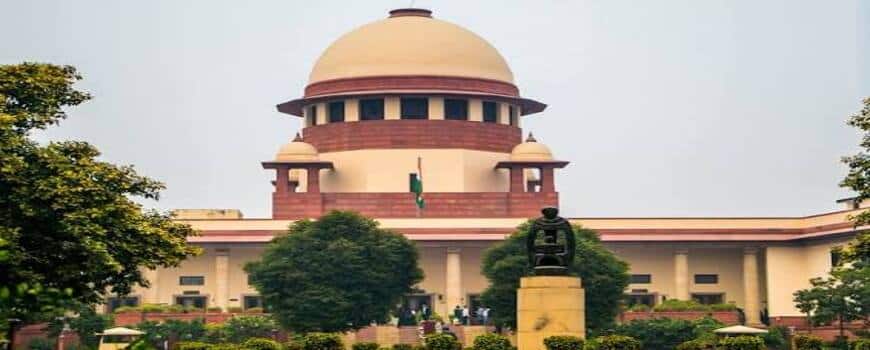
On 24 July 2025, the Supreme Court of India dismissed eight separate appeals filed by Hyatt International Southwest Asia Ltd. – a Dubai-incorporated company with zero leased premises in India – covering Assessment Years 2009-10 through 2017-18, and ruled it still had a taxable Permanent Establishment (PE) in India.
The reason: it controlled two Indian hotels’ operations so deeply from afar that the contract wrapper became irrelevant.
The Deal That Was Designed to Look Hands-Off
Hyatt International, a UAE tax resident under the India-UAE DTAA, signed two Strategic Oversight Services Agreements (SOSA) on 4 September 2008 with Asian Hotels Limited — one for a Delhi hotel, one for Mumbai. Each ran for 20 years with an option to extend by another 10.
The structure looked clean on paper:
- Day-to-day hotel operations: handled by a separate entity – Hyatt India Private Limited – under its own Hotel Operating Services Agreement with the hotel owner.
- Hyatt International’s position: services rendered from Dubai, no obligation to station anyone in India, any employee visits occasional and at its own discretion.
For AY 2009-10, Hyatt filed a return declaring NIL income and claimed a refund of nearly ₹88 lakh. The Assessing Officer disagreed — eventually holding that Hyatt’s activities constituted a business connection under Section 9(1)(i), a PE under Article 5 of the DTAA, and royalties or fees for technical services. Near-identical assessments followed for AY 2010-11 through 2017-18, all consolidated before the Delhi High Court.
Two Fronts, One Outcome
The Delhi High Court framed four questions: whether the fees were taxable as ‘royalty’; whether Hyatt had a PE in India; whether certain ITAT findings were perverse; and whether Article 7(1) applied given Hyatt’s claimed global losses. On 22 December 2023, it split – ruling for Hyatt on royalty, against Hyatt on PE, and referring the global-losses question to a Larger Bench. Hyatt appealed only the PE finding to the Supreme Court.
The Ruling: Five Things the Supreme Court Confirmed
- No lease, no problem. You don’t need to own or lease space to have a PE. Functional control over premises where core business happens is enough – even shared or non-exclusive use qualifies.
- The day-count defence missed the point – twice. Hyatt argued no single employee crossed the 9-month Service PE threshold under Article 5(2)(i). The Court dismissed this: aggregate business presence counts, not individual stays — and the Fixed Place PE test under Article 5(1) doesn’t need any day-count at all.
- Global losses don’t save you. Profit attribution to an Indian PE survives even if the foreign parent’s books show a global loss. Taxability depends on local business presence, not worldwide profitability.
- The subsidiary didn’t shield it. Hyatt pointed to Hyatt India Pvt Ltd handling daily operations as proof of no foreign-parent PE. The Court called this legal form dressed up to hide economic substance.
- Final verdict: Fixed-place PE confirmed under Article 5(1) across all eight assessment years. Income taxable in India as business profits under Article 7 — not as royalty.
Why Tax Counsel Is Worried
- No clean line between legitimate group oversight and a taxable business presence — many ordinary intra-group structures are now newly exposed.
- The ruling is intensely fact-heavy across eight bundled assessment years, making it harder to apply reliably to different fact patterns.
- The royalty win being hollow shows how little a favourable characterisation ruling protects you once PE is found.
- The ‘stability, productivity, dependence’ test is partly drawn from agency PE commentary- some scholars say it was never designed for fixed-place PE analysis.
Old Comfort Zones vs. Post-Hyatt Reality
| Area | The Old Comfort Zone | Post-Hyatt Reality |
| No office or lease in India | No fixed address = no PE. | Functional control over a space is enough — ownership and lease are irrelevant. |
| 9-month treaty threshold (Service PE) | No single employee stayed long enough, so we’re safe. | Wrong battle. A Fixed Place PE under Article 5(1) doesn’t need any day-count. |
| Separate local subsidiary | Day-to-day run by an Indian company = foreign parent shielded. | Real strategic control from abroad can override the entire paper split. |
| Global losses, no Indian profit | If the group is in the red, nothing to tax here. | Profit attribution to a PE is independent of the parent’s global P&L. |
| Winning the royalty argument | Beat the ‘royalty’ characterisation = we’re safe. | A win on royalty/FTS is irrelevant once PE is found — income just gets taxed as business profits. |
| Intra-group oversight role | It’s just brand guidance, not operating a business. | Deep enough control over core operations can itself constitute the business — and create a PE. |
The Bottom Line
Hyatt wasn’t running a sham. It had genuine commercial reasons to separate strategic oversight from daily operations – that’s how hotel franchising works globally. It even won the royalty argument. But that win was hollow.
What sank the case was the sheer depth of control retained from abroad – hiring power, policy-setting, fee structures tied to performance. Once the Court looked past the contractual architecture at who was actually running the show, the PE finding was almost inevitable.
| THE LESSON: If your ‘oversight’ role quietly does the heavy lifting – setting the pricing, hiring the key people, defining the standards — neither the contract title nor a win on a side issue will save you. The Tax Department, and now the Supreme Court, will look straight through it. |
By,
Team AnBac Advisors
Disclaimer: The intent of this article is knowledge sharing with facts for increasing awareness on tax and corporate matters, and no intention exits to discuss or share opinion on any specific company or its operations.